San Diego SPJ Applauds Proposed SDUSD Email Retention Policy Settlement

The San Diego chapter of the Society of Professional Journalists is pleased to learn of a possible resolution to a matter we’ve been closely involved with for more than a year.

In a closed session meeting Tuesday evening, the San Diego Unified School District Board of Trustees agreed to modify the district’s email retention policy, which previously stated that certain emails would automatically be deleted after one year. Under the new modified policy, the district will keep all emails for at least two years. The change is part of a settlement stemming from lawsuits filed by Voice of San Diego and San Diegans for Open Government.

Since June 2017, San Diego SPJ has urged the district to retain emails for at least two years, a practice in place at other large California school districts. We alsoexpressed concern with the lack of transparency surrounding the implementation of the policy — concerns we feel the school board failed to take seriously.

This past May, the day before the scheduled deletion of millions of emails, Voice of San Diego and San Diegans for Open Government requested temporary restraining orders to halt the policy’s implementation. In August, Superior Court Judge Ronald Styn ordered the district to refrain from deleting any emails, pending a 2019 trial.

This week’s settlement agreement, if approved by Judge Styn, would also bar the district from destroying any email that’s part of litigation or a public-records request, and it would require the district to pay $52,000 in attorney fees, at taxpayers’ expense. The settlement agreement will remain in place for five years. After that, the District can return to its previous one-year retention policy.

This agreement reflects exactly what San Diego SPJ repeatedly urged the school district to do; we just wish it hadn’t required legal action.

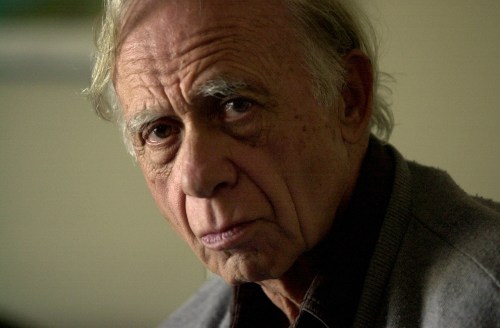
Civic Activist, Transparency Advocate Mel Shapiro Dies at 90

The San Diego chapter of the Society of Professional Journalists was saddened to learn about the passing of 90-year-old civic activist Mel Shapiro.

Shapiro was a source of accurate and reliable information for a generation of journalists in San Diego County, many of whom relied on his tips to develop watchdog stories.

A former New York accountant, Mel Shapiro moved to San Diego and advocated for better transparency by all agencies across the county. He was basically a professional seeker of public records and held officials accountable for not releasing critical information. His Twitter bio boasted that he had won two published appeals in his fights for government transparency.

In 1987, Shapiro’s efforts to uncover wasteful spending within the San Diego Housing Commission garnered national attention when he was featured in The Wall Street Journal. The evidence Shapiro uncovered eventually led to the firing of Housing Commissioner Ben Montijo.

Over  the years, Shapiro regularly worked behind the scenes and never sought out public attention or acclaim for his muckraking. But in 2012, he accepted SPJ’s Sunshine Award and in a city proclamation, was described as a “civic activist and watchdog possessed of much passion and purpose.”

San Diego is a better place because of Shapiro’s service. Rest in peace, Mel.

Better Journalism Workshop: Reporting on Trauma

Interviewing someone who’s recently experienced trauma — the death of a loved one, a serious illness or injury, or a natural disaster — is one of the more difficult things we do as reporters. How do you approach someone in a way that’s not intrusive? What questions are OK to ask and how should you ask them? And what about the impact on yourself as a reporter? What should you do to maintain your sanity when covering a difficult topic?

Join the San Diego chapter of the Society of Professional Journalists at the San Diego Central Library at 6:30 p.m. Tuesday, Nov. 27, for a panel discussion on covering trauma. We’ll delve into ethical issues, do’s and don’ts, and how to minimize your own stress level when reporting on troubling subjects.

WHAT: Panel on Reporting on Trauma
WHO: Rory Devine, NBC San Diego; Lyndsay Winkley, San Diego Union-Tribune; Melanie Barker, LCSW, clinical director, SDSU Research Foundation; Kelly Davis (moderator), independent reporter
WHEN: Tuesday, Nov. 27, 6:30 p.m. (social), 7 p.m. (panel)
WHERE: San Diego Central Library, 330 Park Blvd., San Diego 92101. Shiley Suite on the ninth floor. FREE PARKING IN LIBRARY GARAGE WITH VALIDATION STAMP IN LOBBY.

Bring your questions or send them in advance to spjsandiego@gmail.com.

And let us know that you’re coming with an RSVP to Facebook.

Ron Bonn, former SD-SPJ member and veteran journalist

Ron Bonn, a former member of the San Diego SPJ chapter board and a veteran journalist whose long broadcasting career included producing stints with such esteemed newsmen as Walter Cronkite and Tom Brokaw, has died. He was 88.

Bonn will be remembered as a passionate journalist who in his later years became an educator, passing on his journalistic knowledge to 400 University of San Diego students over the course of 10 years. In a farewell message he penned for the San Diego SPJ website in 2012 marking the end of his USD teaching job, he looked back on his 40-year career in TV news and said,” I understood that I had done what the Brits tell us to do: ‘Find a job you love, and you’ll never work a day in your life.’”

Bonn won three Emmys during his broadcasting career and after retiring from television news, he co-wrote the book, “How to Help Children Through a Parent’s Serious Illness.” A prolific letter writer in his post retirement years, Bonn covered a broad spectrum of issues dear to him in his missives to the Union-Tribune,  from the National Rifle Association and the Second Amendment to the GOP tax reform efforts and sexual harassment.

SPJ was fortunate to have benefited from his years of wisdom and volunteer service. In that piece he wrote reflecting on his  teaching years, Bonn reminded so many of us why we crave journalism: “Perhaps the greatest single advantage of a career in journalism,” he mused, “is that you never stop learning.”